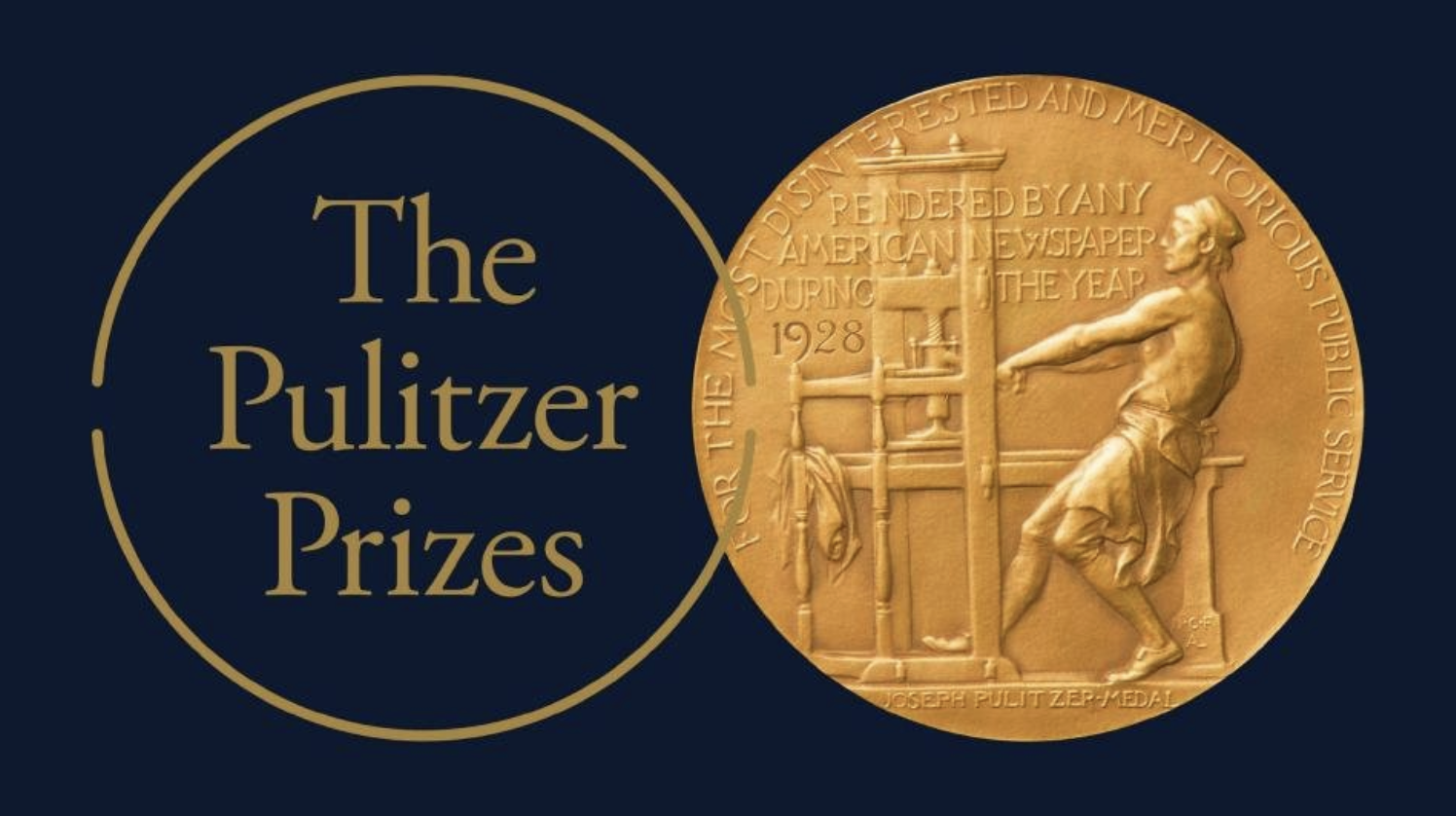
The Pulitzer Prizes were announced this week, and the winning books in the nonfiction categories are worth paying attention to – yes as cultural news, but also as a masterclass in what serious, lasting writing actually looks like. Every year, the Pulitzer board makes a case for the kind of work that we should all be learning from, and this year’s selection is particularly instructive.
For anyone thinking about writing a book – a memoir, a business book, a work of expertise – the titles on this list offer a useful reminder of what separates writing that matters from writing that simply exists.
General Nonfiction: There Is No Place for Us by Brian Goldstone
The general nonfiction prize went to Brian Goldstone for There Is No Place for Us: Working and Homeless in America, published by Crown in March 2025. It was one of the ten best books of the year according to both the New York Times and The Atlantic.
The book follows five Atlanta families over several years as they struggle to remain housed in a gentrifying, increasingly unequal city. What makes it remarkable is its central argument: that the families Goldstone documents are not homeless because the economy has failed. They are homeless because it is succeeding. The subjects work primarily in minimum-wage jobs – from cleaning to warehouse work – which do not provide them with stable income. Many have been forced to sleep in their cars and extended-stay motels, all the while sending their children to school and going to work the next morning.
Because they are not defined by the government as homeless, they are actively excluded from the federal homeless census and ignored by policymakers. Goldstone spent six years reporting this book. The Pulitzer jury described it as a feat of reportage, analysis, and storytelling.
What is instructive here from a writing perspective is the precision of the focus. Goldstone did not write about homelessness in general. He wrote about five specific people, in one specific city, during one specific period of economic change. That specificity is what gives the book its force. The reader cannot abstract away from the problem because the book refuses to let them.
History: We the People by Jill Lepore
The history prize went to We the People: A History of the U.S. Constitution by Jill Lepore, a Harvard professor of history and law and staff writer at The New Yorker. Published on the occasion of the 250th anniversary of the nation’s founding, it is her fifteenth book – and by many accounts, her most urgent.
The central fact the book rests on is a striking one. Nearly twelve thousand amendments to the US Constitution have been proposed since 1789. Only twenty-seven have ever been ratified. The document has not been meaningfully amended since 1971, and Lepore’s argument is that this is not a sign of stability – it is a warning. Without amendment, she writes, the risk of political violence rises. So does the risk of constitutional change being seized by presidential power rather than achieved through democratic process.
What Lepore traces is not the Constitution as a legal document but as a lived, contested, and frequently frustrated aspiration. Ordinary people – suffragists, civil rights campaigners, labour activists, environmentalists – have spent generations trying to hold the document to its own promises. Lepore recovers their stories, drawing on an extraordinary archive she assembled called the Amendments Project, which catalogues every significant proposed amendment and the movements behind it. Most of those bids failed. The book asks why, and what that failure has cost.
Barack Obama named it one of his favourite books of 2025. The Los Angeles Times described it as a book that lands at the right moment, like a life buoy. It is history writing that does not feel like history – it feels like the present, which is precisely what makes it worth reading.
Memoir: Things in Nature Merely Grow by Yiyun Li
The memoir prize went to Yiyun Li for Things in Nature Merely Grow, and it is the most devastating of this year’s winners. Li described the prize as a bittersweet honour, writing the book because of her faith in language, in thinking, and in carrying on despite the difficulties.
Li lost both her sons – Vincent in 2017 at sixteen, and James in 2024 at nineteen. Both chose suicide, and both died not far from home. The book is her reckoning with the second loss.
Things in Nature Merely Grow refuses to be captured by prevailing narratives of grief and mourning. Instead, Li embraces radical acceptance, striving to create an alphabet capable of articulating experiences for which language so often falls short. The Guardian described it as resolutely unsentimental, and yet winding with emotional force.
What the winners have in common
It would be easy to read these three books as simply the best of their respective categories. But they share something more specific – something worth thinking about for anyone who wants to write a book that reaches people.
Each of them is built around a question the reader cannot easily dismiss. Not a thesis to be argued, but a situation to be understood – one that demands something from the reader. Why are people with jobs sleeping in their cars? Why can the most powerful democracy in the world not change its own founding document? How does a person continue to live after losing everything?
Each of them is grounded in specificity rather than abstraction. Goldstone follows five families, not a demographic. Lepore traces individual amendment campaigns, not constitutional theory. Li writes with the precision of someone who knows that generality is a form of erasure.
And each of them is honest about difficulty, including the difficulty of the writing itself. Goldstone spent six years on the ground before he had a book. Lepore built an archive of thousands of proposed amendments before she understood the pattern. Li opens by saying there is no good way to say what she is about to say – and then says it anyway.
These are not books that arrived easily. They are books that were worth the difficulty of making them. That, more than any prize, is the standard.
Authors & Co is a UK hybrid publisher for nonfiction books. Founded by Abigail Horne in 2017, we help founders, leaders, and experts write and publish books that work strategically. Over 700 authors, 50+ countries.